Happenings
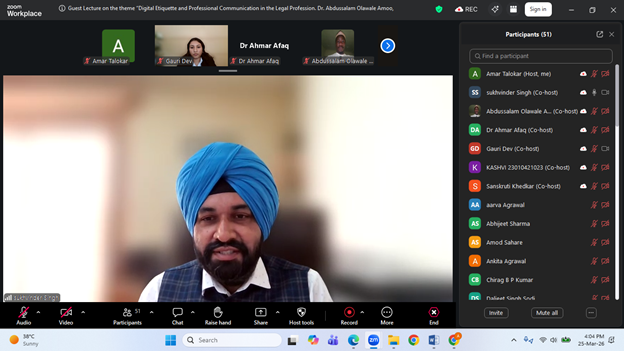
An International Virtual Lecture on the topic “Digital Etiquette and Professional Communication in the Legal Profession” was successfully organized by the International Cell, Symbiosis Law School, Nagpur, on 25 March 2026 at 04:00 PM (IST). The session aimed to equip law students with essential skills required for maintaining professionalism in digital communication, an increasingly critical aspect of contemporary legal practice.
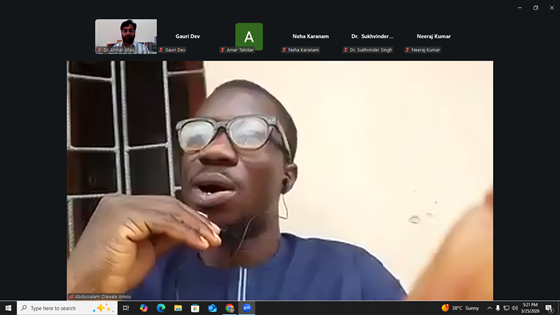
The lecture was delivered by Dr. Abdussalam Olawale Amoo, Lecturer in the Department of English and Literary Studies at the Federal University, Wukari, Nigeria. The session witnessed active participation from students and faculty members, reflecting keen interest in the subject matter.
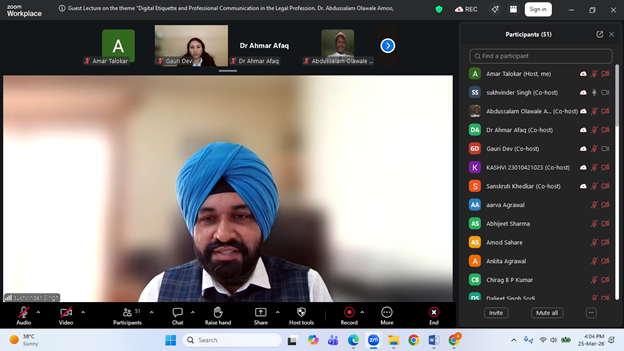
The programme commenced with a welcome address by Dr. Sukhvinder Singh Dari, Director, Symbiosis Law School, Nagpur. In his address, he emphasized the growing importance of digital professionalism in the legal field, highlighting how communication skills significantly influence a lawyer’s credibility, professional relationships, and ethical standing.
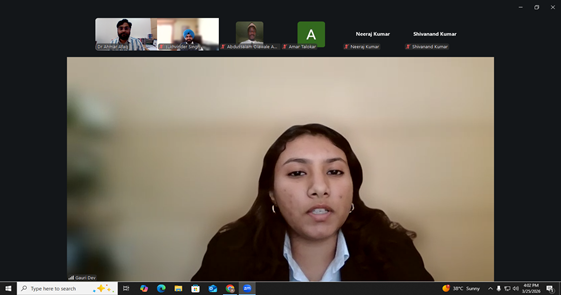
The session was moderated by Ms. Gauri Dev, a second-year student, who ensured the smooth conduct of the lecture and facilitated interaction between the speaker and participants.
Dr. Amoo began the session by contextualizing the relevance of digital communication in the legal profession. He emphasized that legal practice today is deeply intertwined with digital platforms such as emails, messaging applications, and virtual meeting tools. He highlighted that communication in the legal field is not merely about information exchange but is intrinsically linked to professional identity, credibility, and ethical responsibility.
The speaker elaborated on the concept of digital etiquette or netiquette, defining it as the set of standards governing appropriate behavior in digital communication. He stressed that for legal professionals, digital etiquette extends beyond politeness and includes adherence to confidentiality, precision, and ethical conduct.
A significant portion of the lecture focused on email communication, identified as the most prevalent mode of professional interaction in the legal domain. The speaker outlined essential principles such as:
- Use of clear and precise subject lines
- Adoption of appropriate salutations
- Structuring emails in a concise and logical manner
- Maintaining a polite and professional tone
Through practical examples, Dr. Amoo illustrated the difference between inappropriate and professionally acceptable email communication. He demonstrated how tone and wording can influence perceptions, relationships, and even legal outcomes.
The lecture highlighted the importance of maintaining appropriate tone while communicating across hierarchical levels. Dr. Amoo explained that communication with senior advocates, judges, clients, and colleagues must reflect awareness of professional hierarchy and responsibilities.
He cautioned against common pitfalls such as:
- Over-familiarity
- Excessive informality
- Commanding or abrupt tone
The speaker discussed the increasing use of platforms such as WhatsApp and Slack in professional settings. While acknowledging their convenience, he emphasized that such platforms do not diminish professional responsibility.
Key guidelines included:
- Avoiding excessive abbreviations and emojis
- Maintaining respectful tone
- Being mindful of timing, especially late-night communication
- Avoiding the culture of false urgency
The lecture addressed the impact of social media on a lawyer’s professional image. Students were advised to exercise caution while engaging online, avoiding inflammatory remarks, and maintaining professional boundaries at all times.
Dr. Amoo explored the growing role of AI tools such as ChatGPT, Grammarly, and Copilot in legal communication. While acknowledging their benefits in drafting and proofreading, he warned against over-reliance and emphasized the need for independent verification of information.
He also highlighted ethical concerns such as:
- Confidentiality risks
- Inaccurate or fabricated content
- Responsibility for AI-generated outputs
The lecture concluded with a strong emphasis on the idea that digital communication is not merely functional but foundational to a legal professional’s identity. Dr. Amoo remarked that before legal expertise is recognized, a lawyer is often judged by the quality of their communication.
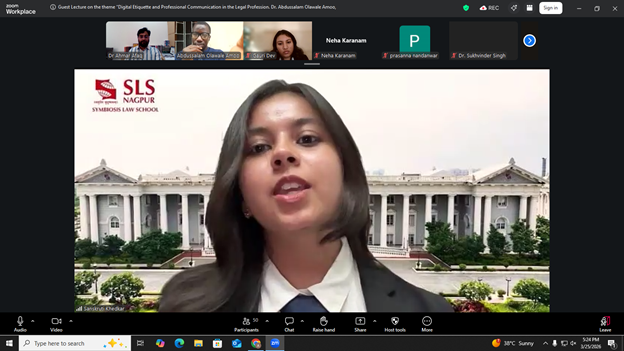
The session concluded with a Vote of Thanks delivered by Ms. Sanskruti Khedkar, who expressed sincere gratitude to the speaker for his insightful and engaging session. She also thanked the Director, faculty members, and students for their active participation, as well as the organizing team for the successful conduct of the event.
The lecture proved to be highly informative and practical, enabling students to:
- Understand the significance of professional digital communication
- Develop awareness of ethical and legal implications
- Enhance their ability to communicate effectively across digital platforms
- Prepare for real-world legal practice in a digital environment
Overall, the session was a valuable academic engagement that contributed meaningfully to the professional development of law students.