Happenings
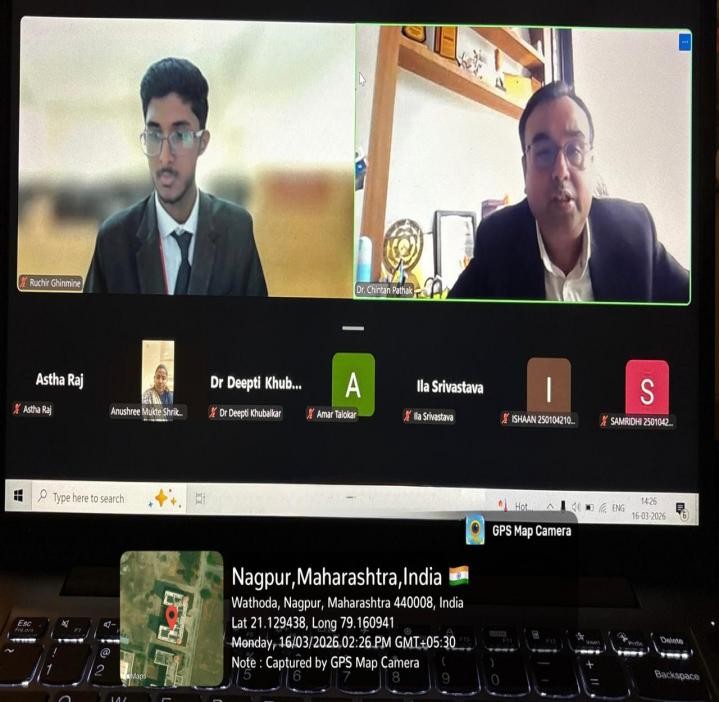
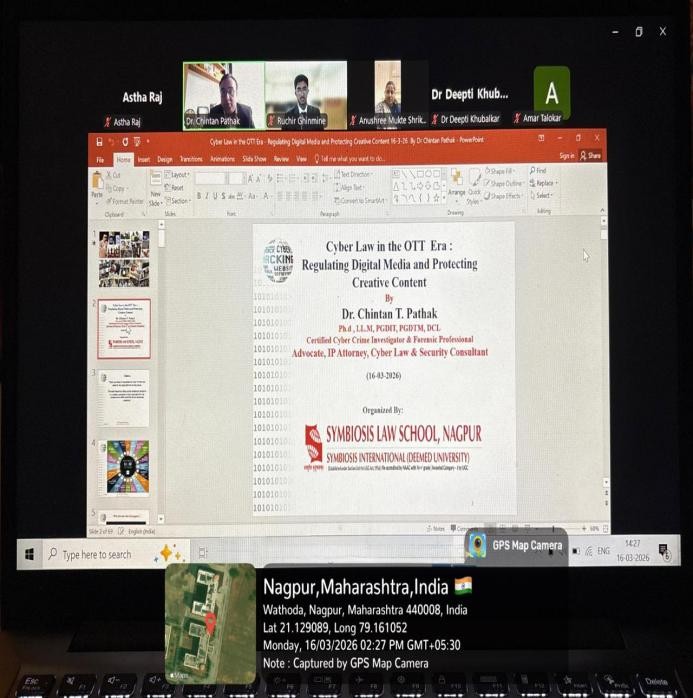
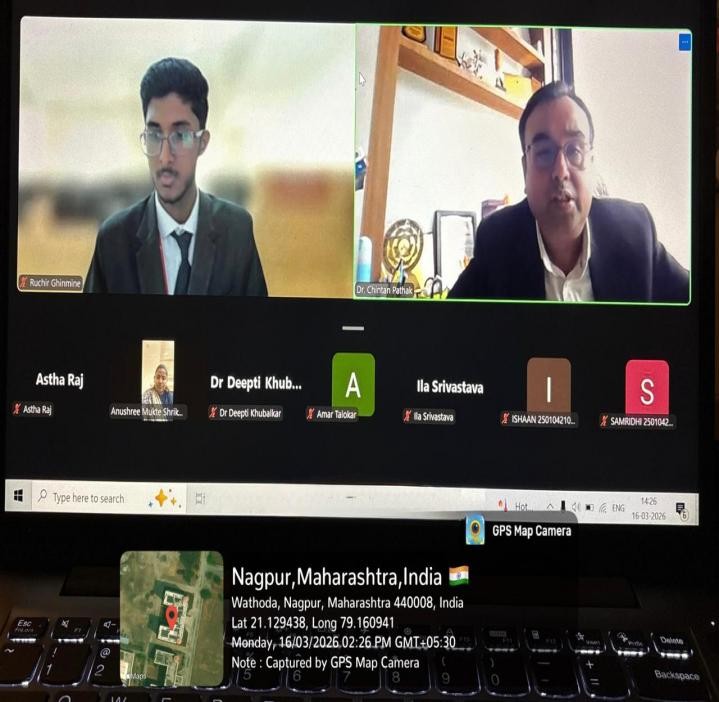
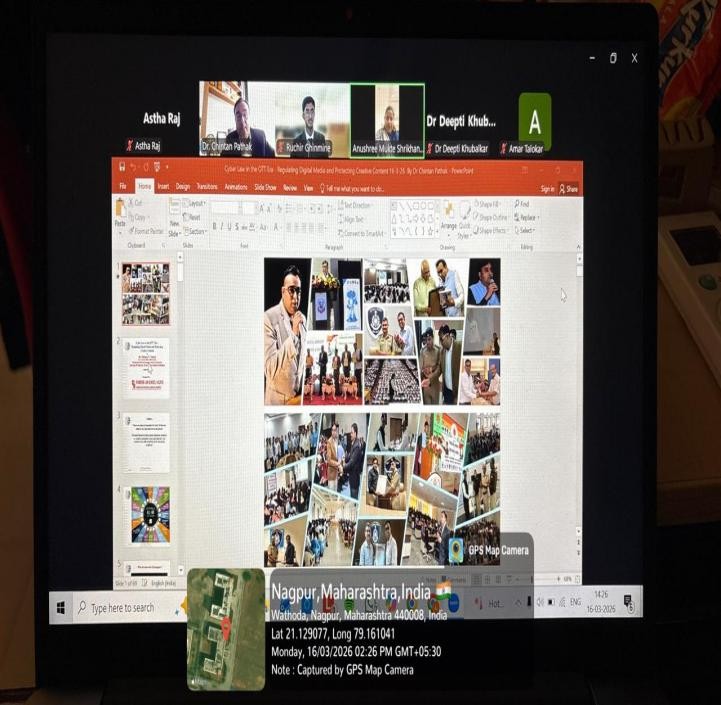
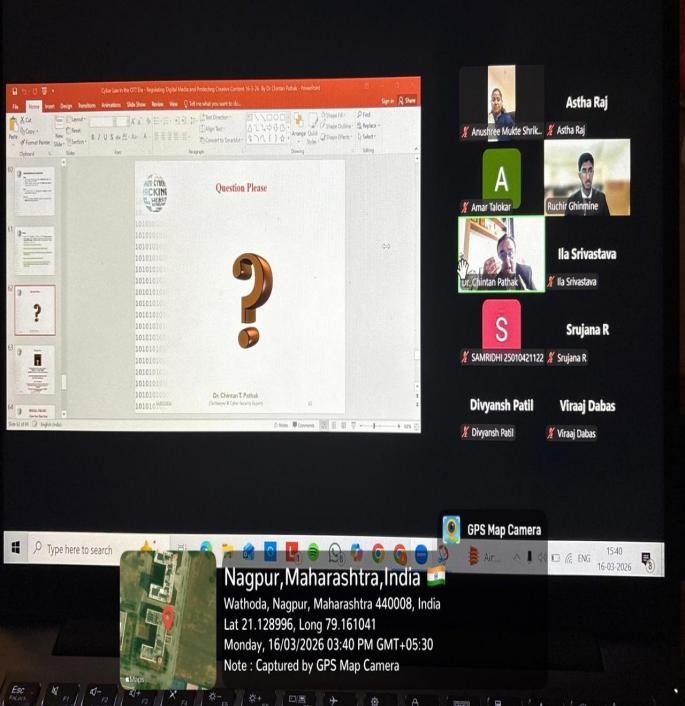
“Symbiosis Centre for Education on Entertainment and Media Laws and Advancement in Cyber Law and Policy” organized an Online Workshop on the theme "Cyber Law in the OTT Era: Regulating Digital Media and Protecting Creative Content" on 16th March 2026 at 2:15.M. at an online platform- Zoom meetings by resource person Dr. Chintan Pathak, Advocate on Recore & Constltatnt, Cyber Law. The event was conducted as an in-house academic activity and was open to all the 1st Year B.A/BBA.LL.B. students of the institution. Total 175 first-year students attended the session with great enthusiasm, making the event not merely a lecture but a platform for meaningful academic exchange. The event was aligned with Sustainable Development Goal (SDG) 4: Quality Education aiming to "ensure inclusive and equitable quality education and promote lifelong learning opportunities for all" , Sustainable Development Goal (SDG) 8 aiming at Decent Work and Economic Growth and 16: Peace, Justice, and Strong Institutions, underlining the importance of an independent judiciary and robust legal institutions in upholding democratic values.
1. Session Highlights: Key Topics Covered
The speaker began by contextualizing the discussion with relevant statistical data on data usage and consumption patterns in India, highlighting the massive reach of digital media. This led to an examination of the digital divide, noting the disparity in access and consumption between different segments of society. A significant portion of the session was dedicated to the nature of content on various OTT platforms. The speaker discussed: The variety of content available, from critically acclaimed series to problematic material.
The rise of erotic and vulgar content, and the issues of obscenity and abusive language. The real-world impact of OTT on traditional entertainment, specifically the effect on theaters and the film industry. The growing threats of misinformation and disinformation in the digital sphere.
To illustrate these points, the speaker used popular culture references, including examples from the shows Mirzapur and Patal Lok, to discuss how violence and language are portrayed and the legal questions they raise.
2. The Indian Legal and Regulatory Framework
The core of the workshop focused on the legal mechanisms in place to regulate this space. The speaker noted that the IT Minister of India has observed the need for stronger laws to keep pace with content evolution.
Key legislations and rules discussed included: The Information Technology (IT) Act, 2000: With a focus on Section 2(w) regarding intermediaries. The IT Rules, 2021 and subsequent amendments: Detailing the framework for regulating digital media and OTT platforms. Prohibited Content and Age-Based Consent Classification: Explaining the rules for classifying content suitable for different age groups. Protection of Children: The application of POCSO (Protection of Children from Sexual Offences) Act to online content. The "Safe Harbour" Defence: The legal protection available to intermediaries, and the conditions under which it can be lost. The Three-Tier Grievance Redressal Mechanism: The system for addressing public complaints about OTT content, involving self-regulation by platforms, an industry body, and oversight by the government. Content Takedown Rules: The strict requirement for intermediaries to remove prohibited content within a tight window of 2 to 3 hours.
Other Applicable Laws: The speaker also touched upon the Cable Television Network Act (as a predecessor to OTT regulation), the Bharatiya Nyaya Sanhita (BNS) , and the role of authorities like the Ministry of Information and Broadcasting.
3. Emerging Challenges and New Rules
The workshop addressed the latest developments in cyber law, including the 2026 IT Amendment Rules and the new Deepfake Regulations. The expanded responsibility of intermediaries in tackling synthetic and manipulated media was a key point of discussion. The speaker also explained the Digital Media & OTT Ethics Code, which mandates a monthly submission of ethics reports by platforms.
4. Business Models and Agreements
Moving beyond content, the session also covered the business side of OTT, including part-payment models and segmented payment options that allow users to access specific content. The speaker stressed the importance of strong contractual agreements between creators, producers, and platforms to avoid copyright disputes. Reference was made to specific copyright judgments that have shaped the OTT landscape in India.
5. International Perspective
To provide a global context, the speaker briefly compared India's approach with that of other nations, citing the OTT and IT laws in Australia, South Korea, Singapore, and Germany. This comparison highlighted different cultural and legal approaches to the same technological challenges, including the balance between regulation and freedom of speech.
6. The Constitutional Balance & Conclusion
A crucial part of the discussion was the tension between regulation and Freedom of Speech and Expression under the Indian Constitution. The speaker emphasized that any regulation must be reasonable and not stifle creativity. The workshop concluded on a philosophical yet urgent note with the powerful statement: "We watch, we become." The speaker stressed that while laws are necessary, the ultimate need of the hour is for the creation and consumption of good quality content that informs and uplifts, rather than degrades. The law can set the boundaries, but society and creators must fill the space with meaningful art.
Conclusion
The workshop was highly successful in demystifying the complex legal environment surrounding OTT platforms. It equipped attendees with a nuanced understanding of the challenges of regulating digital media while protecting both creative rights and the societal fabric. Mr. Ruchir Ghinmine conducted the proceedings of the workshop and Dr. Anushree Mukte proposed a formal vote of thanks.